Blown-in insulation in Pueblo CO - an attic that's sealed, level and still breathing
Hot rooms upstairs or a power bill that climbs every winter? We seal the gaps, then blow the attic level from edge to edge.
- Services
- 16
- Service areas
- 7
Have us look at your attic
I go up, measure the inches already there and tell you plainly what I find.
Request an estimateIs blown-in insulation the fix for a drafty Pueblo attic?
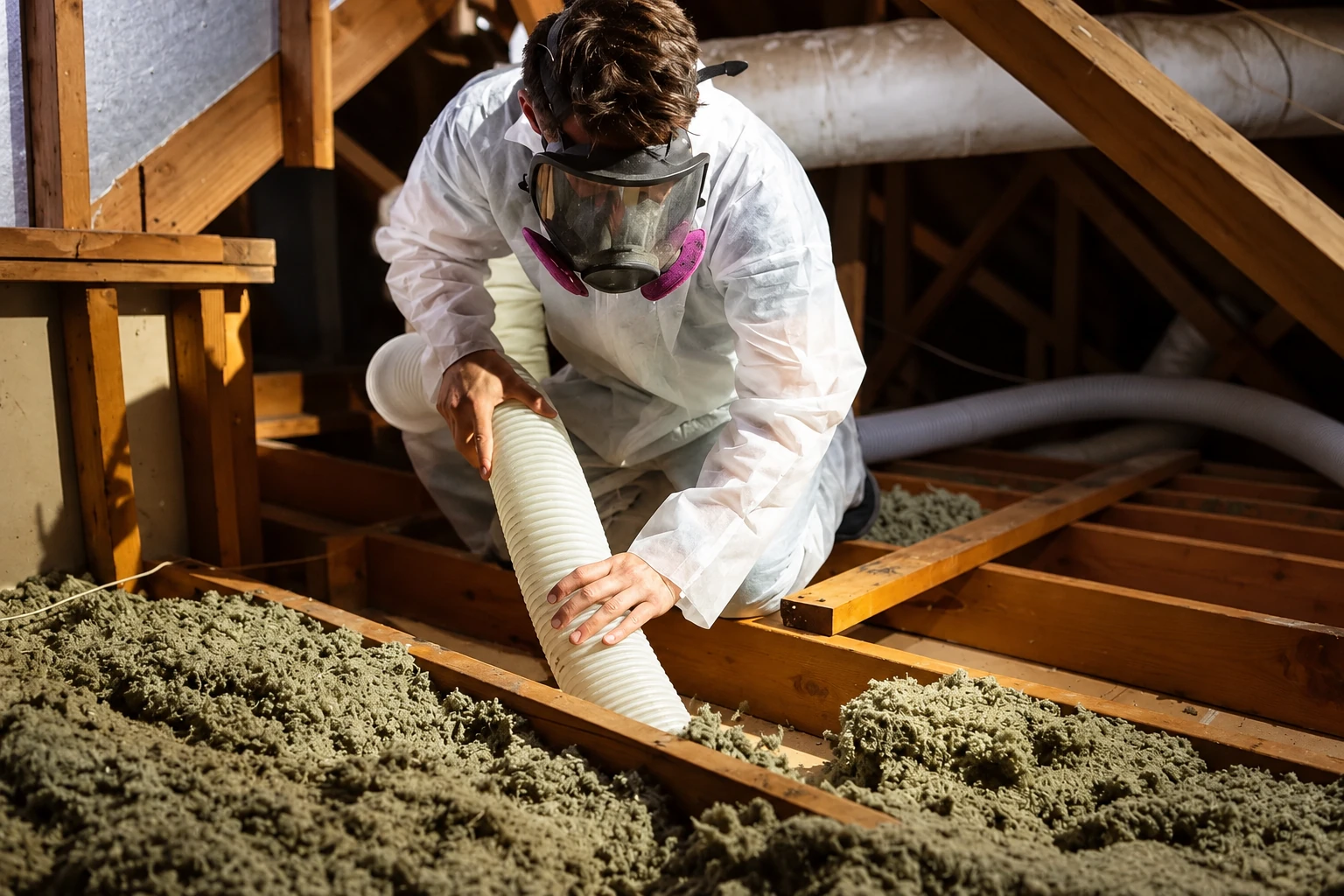
Blown-in insulation is loose fill, usually cellulose or fiberglass, that we blow through a hose across your attic floor once the gaps in the ceiling are sealed. For a lot of houses in Pueblo, CO, it's the most direct way to keep the upstairs warm in winter and cooler in summer.
Most people call Precision Pueblo Spray Foam Insulation because the upstairs is hot, the room over the garage is cold or the power bill keeps climbing. When I go up, there's usually a few settled inches and a lot of gaps around lights, pipes and the hatch. We're based in Pueblo and work from Pueblo West up to Colorado Springs and plenty of the cities around them. The price turns on how big the attic is, how many inches are already up there, how much sealing the ceiling needs and whether old material has to come out first. The schedule mostly turns on that last part and on any furnace or water heater work that has to happen before we start. We look at the space before we put a price on anything, so the estimate is where you get your own number.
How we do blown-in insulation in your attic
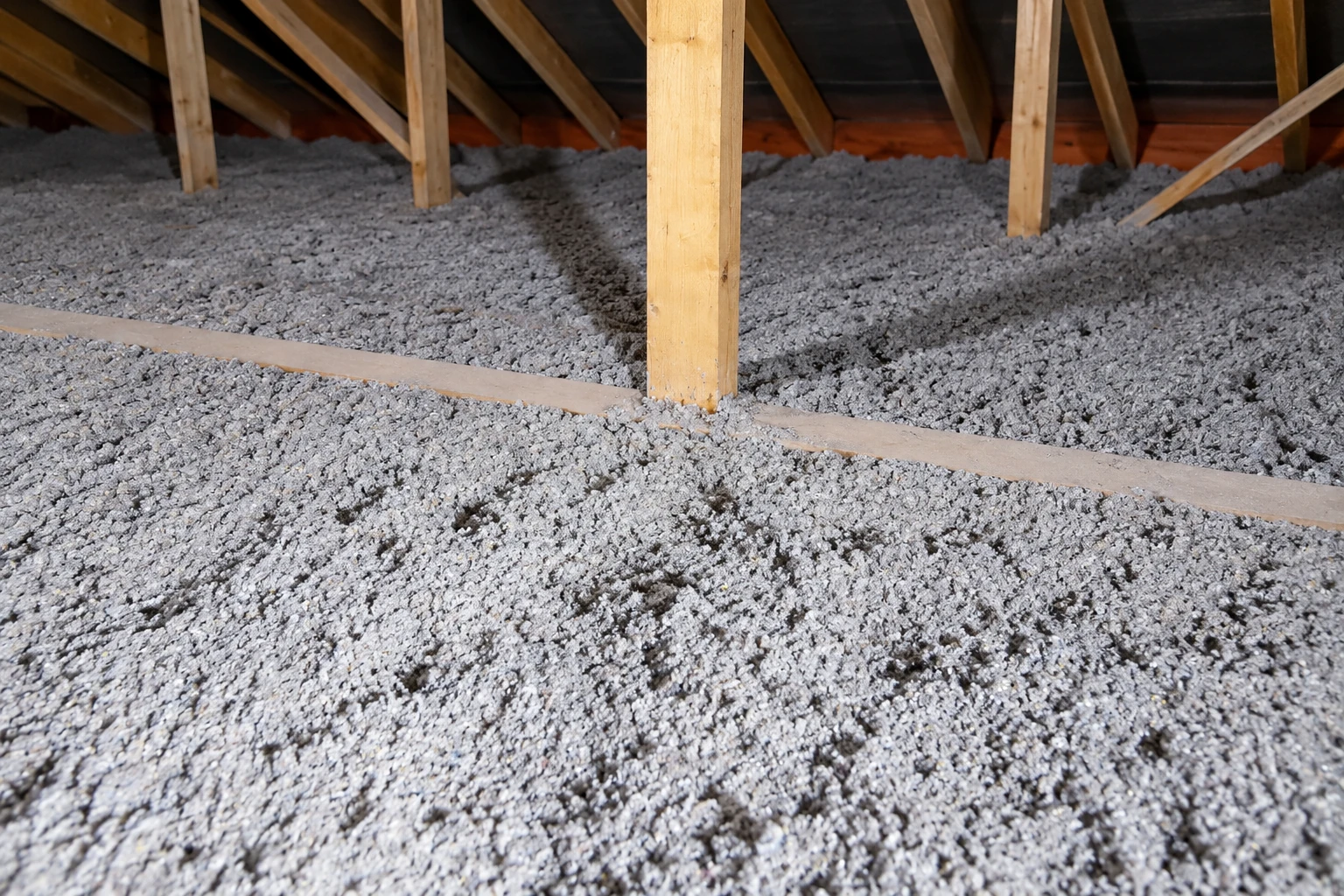
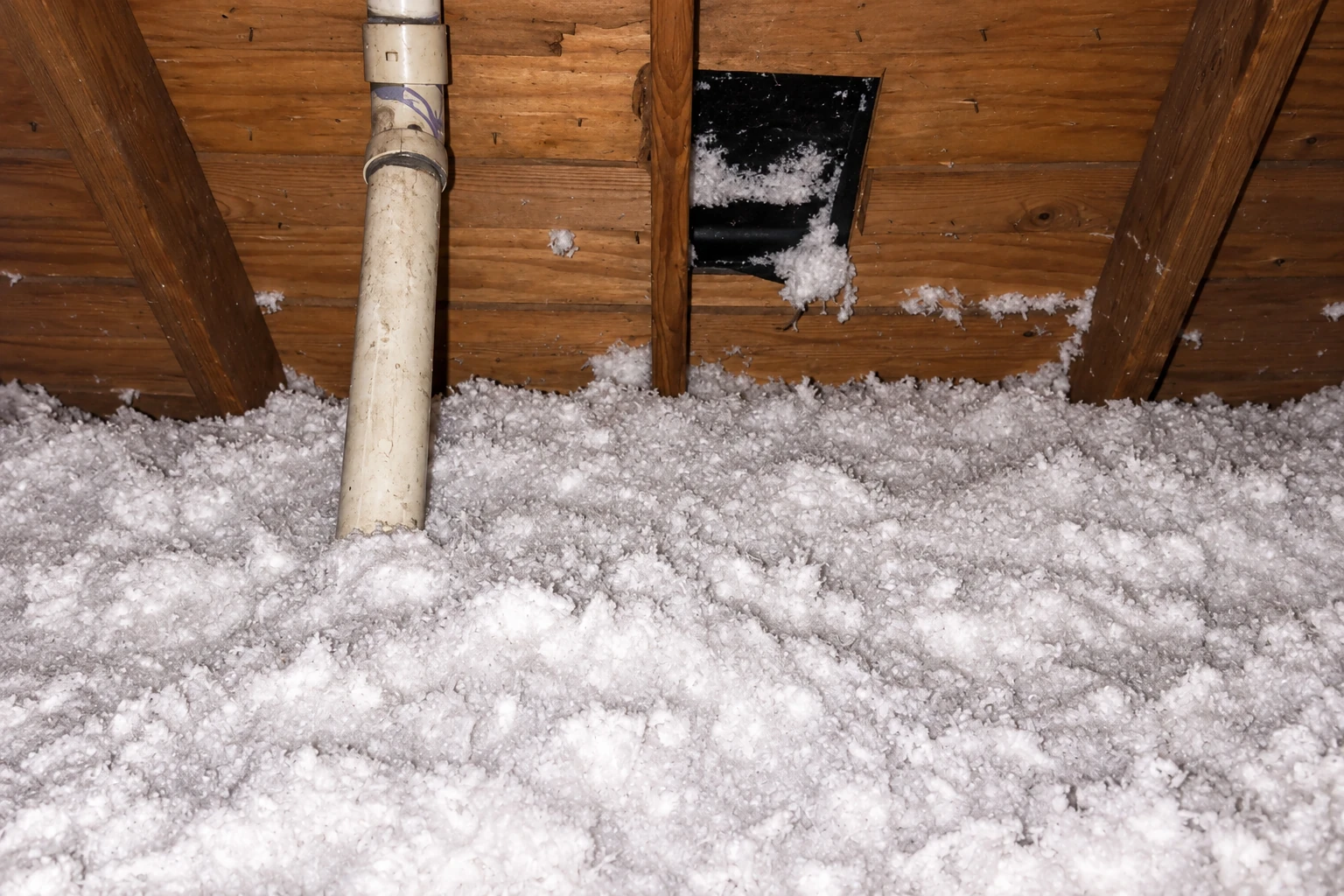
First I go up and see what's there, how many inches, what kind and whether it's dry and clean. Then our crew does the air sealing, closing the gaps around can lights, pipes, wires and the hatch, because loose fill laid over a draft just has air blowing through it. We set baffles at the eaves, stiff chutes that hold the insulation back from the vents, so the attic keeps breathing and moisture doesn't collect in the framing. Then we blow it level from one edge of the ceiling to the other, because the edges over your outside walls are where most jobs come up thin and where the cold gets in. Cellulose or fiberglass mostly comes down to price against how much it settles, and we'll tell you which we'd pick for your attic.
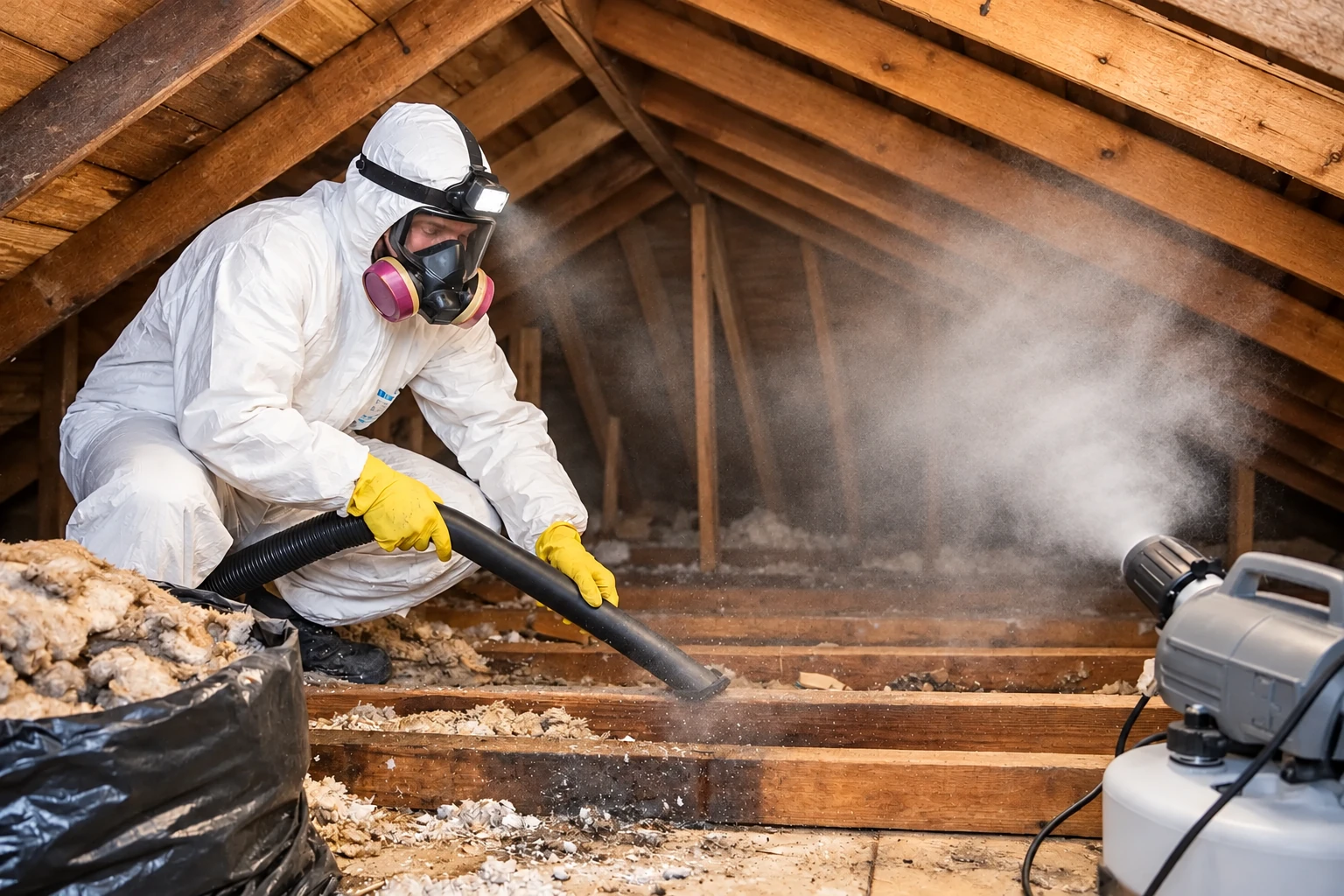
If what's up there now is soaked, matted or full of droppings, we take it out first with insulation removal, because new material on top of a bad layer keeps the problem and the smell. The mice rarely leave a forwarding address. Foam costs more and seals air while it insulates, so it earns its price when your ductwork lives in the attic. Otherwise, sealing the gaps and topping up with loose fill usually wins. When the attic is only part of why the house is uncomfortable, our home insulation work looks at where else it's losing heat.
Blown-in insulation in Pueblo and what changes the job here
In the city of Pueblo, building permits come from the Southern Colorado Building Department. Whether a blown-in attic job at your house needs one is something we check rather than guess, and if it does, we pull the permit and line up the inspection.
What we see most around here is older houses with a few inches that settled flat years ago, can lights punched through the ceiling and eave vents half buried under whatever went in last time. Those buried vents are the main reason the baffles go in before anything else gets blown. Plenty of these houses also have a furnace or water heater venting up a chimney, so I look at those on the first visit too. We run into the same mix on jobs in Pueblo West and Fountain, and we do the work the same way there.
Why call us for blown-in insulation
I check every attic myself
I come out to look at the job myself, which usually means climbing into your attic with a flashlight. Our install crew does the work and I'm on site for most of it, so the person who priced it sees it go in.
Insulating attics since 2017
I taught myself this trade from books and maker guides, then learned the rest on my knees in attics and crawl spaces. Nine years of that teaches you where the air really gets in, which is rarely where people point.
Licensed, fully insured, every job
We're licensed and fully insured. That matters when someone's walking your ceiling joists, because a foot through the drywall shouldn't be your risk to carry.
The right building office, first
Pueblo, the county and the Colorado Springs side don't all use the same building office, so we find out which one covers your address before we start. That way any paperwork is sorted before the crew climbs a ladder.
- Phone
- (719) 601-8052
- Hours
- Mon–Fri: 6 AM–9 PM, Sat–Sun: 8 AM–10 PM
- Location
- Pueblo, CO 81003
What decides how your house feels is the sealing and the edges nobody sees once we leave. Ask for an estimate or call (719) 601-8052, and have your attic size, what's up there now, any vermiculite and your furnace and water heater type handy.
Get a price for blowing in your attic
Estimates are free, done at your home, and there's no pressure to book. We reply within one business day to set a time, then we look at the space before we put a price on anything.
- Phone
- (719) 601-8052
- Location
- Pueblo, CO 81003
- Hours
- Mon–Fri: 6 AM–9 PM, Sat–Sun: 8 AM–10 PM
- Credentials
- Licensed and fully insured.
Frequently asked questions
What is the best blown-in insulation for a Pueblo attic, cellulose or fiberglass?
Cellulose is usually the better value and does more to slow air moving through the attic, while loose-fill fiberglass costs more but settles much less over time. Settling matters because a blown attic only works at the depth it ends up at, not the depth it started at.
How much does blown-in attic insulation cost in Pueblo?
Across the US, professionally installed blown cellulose attic insulation with vent baffles at the soffits usually runs about $4 to $7.50 per square foot. That's a national market range, not our price, and we price your attic once we've seen it. If money's tight, Pueblo County's weatherization program works with Colorado's Energy Office on energy upgrades for income-qualified homes.
How much insulation does a Pueblo attic need?
ENERGY STAR's retrofit table aims for R-60 in an attic with nothing in it, R-value being how well insulation slows heat, and calls for adding R-49 where 3 to 4 inches already sit. Those targets cover climate zones 4 through 8, and Pueblo is in zone 5B, cool and dry. The city has an energy code on the books, and blown attic insulation should meet or beat current code levels, so I start by measuring the inches you already have.
What should I do if my attic has vermiculite insulation?
Leave it alone, because the EPA says to assume vermiculite may be contaminated with asbestos and not to disturb it. We won't blow over it or stir it up, so tell us when you call and we'll plan around what's there.
How do I get my house ready for blown-in attic insulation?
Start with your furnace and water heater, because if they vent up a chimney by natural draft they need enough combustion air, the air they burn, or a switch to power-vent or direct-vent units. Plan that step and any equipment cost before the attic work, not after. Clearing a path to the attic hatch helps too, since that's where the hose goes in.
Can you use blown-in cellulose in a mobile home?
Cellulose isn't recommended for mobile home ceilings or floors, because it breaks down when it gets soaked and it's fairly heavy. If you're in a manufactured home, tell us when you call and we'll talk through what does fit.
Related insulation work
Home insulation
Worth a look when a new attic layer helps but a few rooms still run cold, so we can find the other places your house leaks heat.
Insulation removal
For attics where the old material is wet, flattened or left behind by rodents and needs to go before anything new goes down.